
English| EUR
Suggested for you
More currencies
Choose a language
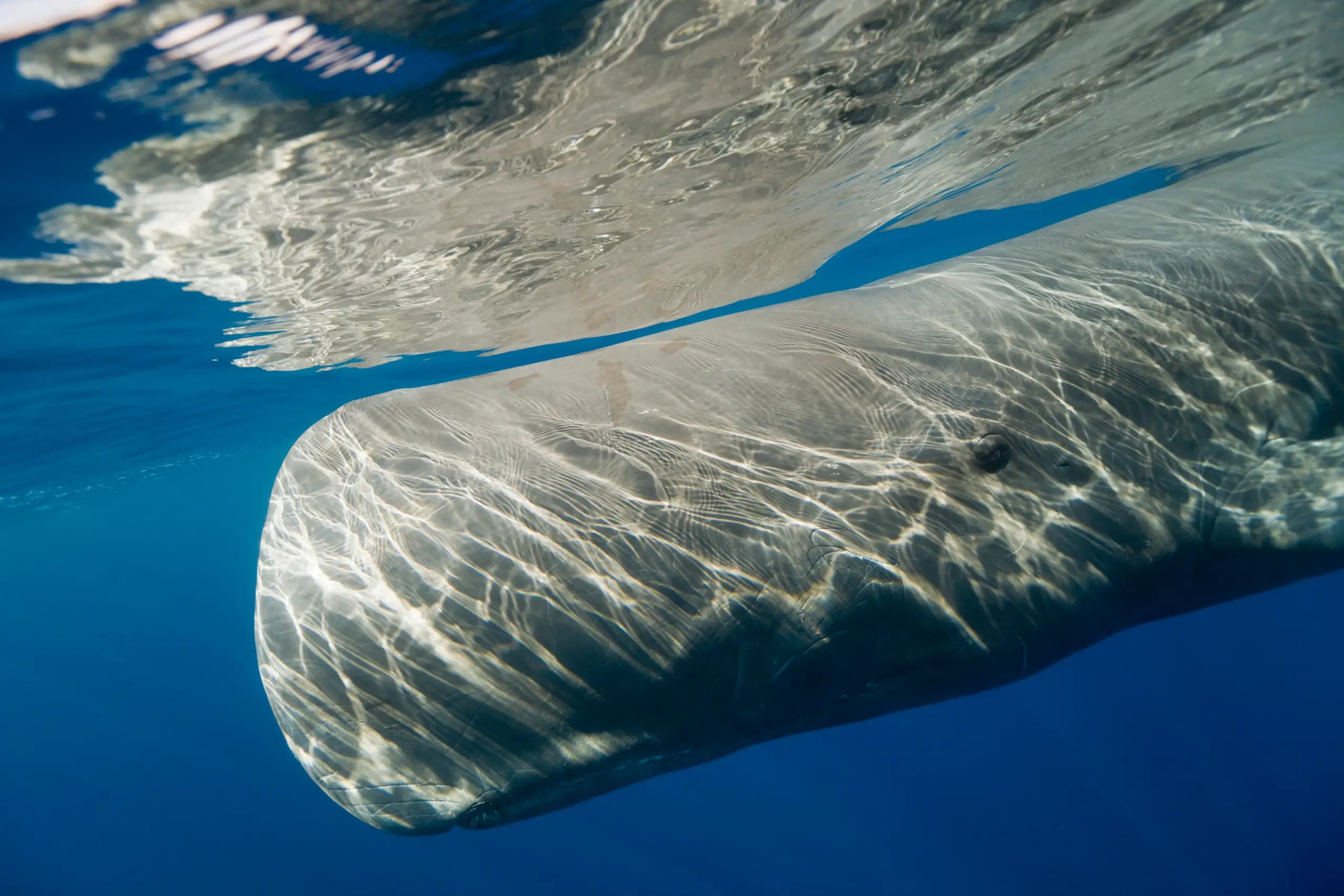
The waters off São Miguel host sperm whales throughout the calendar, but understanding the seasonal rhythms—pod behavior, calf presence, and Atlantic weather—determines whether you encounter a solitary male or a nursery group. This guide breaks down the year by sighting probability, sea conditions, and what each season delivers.
Quick answer
Sperm whale season in the Azores operates year-round, with the highest sighting rates between April and October when resident female pods and juveniles remain in the warmer Atlantic waters. Spring and early summer bring calving activity and larger social groups, while autumn sees increased bull presence. Winter months still yield sightings, though rougher seas and shorter daylight reduce departure frequency.
São Miguel sits above the Mid-Atlantic Ridge, where depths exceeding 1,000 meters begin less than five kilometers offshore—sperm whales hunt squid in these abyssal canyons regardless of the month, making the Azores one of the few Atlantic locations where cetacean tourism never closes for the season. Sperm whale season azores follows a pattern driven by pod structure rather than migration. Resident matriarchal groups—females, juveniles, and calves—remain in Azorean waters year-round, feeding in the nutrient-rich upwellings that characterize the archipelago's submarine topography. Bulls, by contrast, move between feeding grounds, with solitary males appearing more frequently from September through November and again in early spring. April through June marks the calving window, when nursery pods tighten their formations and surface intervals lengthen; guides report these months deliver the most predictable encounters and the longest observation windows. July and August see the highest tour volume, driven by European summer schedules rather than cetacean abundance, though sighting success remains above 85 percent. October's transition period brings both resident pods and transient bulls into the same feeding zones, occasionally yielding rare multi-group encounters. Weather governs access more than whale presence. The North Atlantic stabilizes between May and September, with swells under two meters and wind speeds below fifteen knots on most mornings—conditions that allow boats to reach the deeper offshore zones where sperm whales concentrate. Winter departures depend on forecast windows; January and February see the fewest operations, not because whales leave, but because sea states frequently exceed safe thresholds for zodiac tours. Lookouts positioned on coastal cliffs—vigia stations inherited from twentieth-century whaling—radio coordinates to boats year-round, maintaining the same land-sea communication network that once directed harpoon crews. Cetacean behavior around São Miguel reflects the island's role as a feeding rather than breeding hub. Dives last forty to sixty minutes, with whales descending beyond 800 meters to hunt deep-water squid species unavailable in shallower Atlantic regions. Surface intervals of eight to twelve minutes allow boats to approach under Portuguese marine mammal regulations, which mandate passive observation and prohibit pursuit once a whale begins its descent sequence. Peak season offers logistical ease—more daily departures, better odds of calm seas, wider availability across operators—but the resident pods that define whale watching in the Azores maintain their presence across all twelve months.
“São Miguel's submarine canyons host sperm whales in every season, but spring and early summer deliver the longest surface intervals and the tightest nursery groups.”
Sperm whales are resident in the Azores year-round, but the period from April to October provides the most reliable sea conditions for sightings. Planning your departure during the best arrival window of 08:00–11:00 significantly improves the likelihood of calm waters and optimal visibility.
16°C to 20°C; calm waters
Spring offers high sighting success as whales follow migratory prey patterns.
20°C to 25°C; stable conditions
Warm, stable weather makes these months ideal for sea travel and extended observations.
18°C to 22°C; variable winds
Cooler temperatures and fewer visitors characterize the end of the primary season.
—
Morning departures typically offer the calmest seas and best visibility for whale sightings.
Verdict: The best opportunity for sperm whale watching in São Miguel is during the mid-morning hours between April and October.
The operations center at Marina Portas do Mar remains open daily to facilitate sperm whale watching excursions from Ponta Delgada.
Access to the Marina Portas do Mar is free for all visitors. Whale watching tours are separate, paid services operated by third-party providers.
Verdict: While the marina itself costs 0 EUR to enter, visitors must pay for individual whale watching tours based on the operator and season.
The Marina Portas do Mar is situated along the waterfront of Ponta Delgada on the island of São Miguel. It is accessible via the main coastal road, Avenida João Bosco Mota Amaral.
Follow signs for Ponta Delgada Centro and park at the Marina Portas do Mar underground facility
Take local lines stopping at Avenida Infante Dom Henrique; walk east toward the marina
Request drop-off directly at the Marina Portas do Mar entrance
Walk along the main promenade of Ponta Delgada toward the marina complex
For the best experience, plan your arrival between 08:00 and 11:00. Morning departures typically offer the calmest seas and best visibility for whale sightings.
Preparation for a whale watching excursion in the Azores centers on booking confirmation, weather-appropriate clothing, and motion sickness management.
The waters surrounding São Miguel serve as a critical habitat for sperm whales due to the unique topography of the Atlantic seafloor. These marine mammals demonstrate specific biological and social behaviors that define their presence in the Azores.
60 to 90 minutes per dive
20 tons for adult males
10,000 decibels of sound
Matriarchal social structure
3,000-year-old evolutionary lineage
Everything you need to know about sperm whale season azores
While you can spot cetaceans year-round, the sperm whale season Azores is generally most active during the spring and summer months. Visiting during these periods increases your likelihood of observing these deep-diving residents in their natural habitat. Sightings are subject to migratory patterns and ocean conditions, which vary annually. The Azores whale watching experience is available throughout the year, depending on sea conditions and weather. Local operators monitor the Atlantic waters daily to ensure safe departures from the marina. You can check availability directly via the official site to plan your visit accordingly. Entrance to the marina is 0 EUR, as it is a public space. Paid whale watching tours are separate services provided by licensed operators, and you should check the official site for specific tour options. Prices vary based on the provider and the type of vessel used for the expedition. Morning departures between 08:00 and 11:00 are typically the best for calm seas and clear visibility. This arrival window allows you to take advantage of the most stable ocean surface conditions before potential afternoon changes. Consistent monitoring by spotters helps guide boats to the pods efficiently. Wear comfortable clothing, bring a waterproof jacket, and apply sunscreen before boarding your vessel. You may also want to carry a camera with a secure strap to capture your observations of the North Atlantic marine life. Please follow the instructions provided by your crew regarding safety protocols on the water. While local spotters are highly skilled at locating marine animals, wildlife behavior remains unpredictable. Nature does not provide guarantees for sightings, but the high density of cetaceans in the region makes these expeditions worthwhile. Respecting the animals and maintaining a safe distance remains the priority for all ethical operators. Yes, most operators welcome families on these maritime excursions. You should verify any age restrictions or special requirements with the tour provider when making your booking. Providing children with educational context about marine conservation can enhance their appreciation for the natural environment.